Featured in Mongabay A sea cucumber venture in Zanzibar seeks to balance business and conservation All press →
Community · Shehia Fishers Committees
Zanzibar · Western Indian Ocean

Not livelihoods.
Ocean enterprises.

CORE Zones rest on a simple idea: a well-governed, protected sea is a productive one, and the communities who govern it should share in real commercial returns, not small supplements.

The Principle

Conservation programmes that treat communities as beneficiaries struggle to last. CORE Zones treat communities as commercial partners in a productive enterprise.

Across the Western Indian Ocean, projects that treat communities as recipients of goodwill rarely outlive their funding. Communities take part, receive modest supplements, and step back when the project ends.

Communities protect a resource most firmly when they own the enterprise built on it: when the returns are real, the governance is theirs and the terms are clear.

Conservation initiatives cannot succeed in isolation from livelihood needs. By prioritizing wellbeing development, alongside marine conservation, stakeholders can work toward a management model where ecological protection and improved living standards are mutually reinforcing.

Mensa et al., WCS Tanzania, Ecological & Socioeconomic Baseline Studies, Pemba East MCAs, 2026 →
How Communities Earn

Communities earn first. Always.

Pre-Harvest Wages

The people who patrol, monitor and run the ranch are paid wages from the start, before the first harvest, funded through public co-investment. The work is offered first to the fishers who used the area.

Shared Returns

The returns from each harvest are shared: half to Asili for its inputs and costs, a quarter to the workforce as wages and profit share, a quarter to the village. The split is set in the partnership agreement with the cooperative.

Community Development Fund

The village's quarter goes to community development, decided by the community, not by Asili.

Open to Women and Men

Men and women sign up on separate lists at open town halls overseen by the SFC and the Sheha. The lists reopen every year.

Patrol Infrastructure & Equipment

The cooperative receives the equipment it needs to patrol and monitor the area, including watchtowers and floating security rafts. The infrastructure belongs to the cooperative.

Community-Set Operations

Each community sets its own working arrangements to suit its people and its coastline. At Shamiani, the community chose the shift timing and how many days each roster member works.

Revenue Share

In plain terms.

The split is written into the partnership agreement between the cooperative and Asili before ranching begins.

Asili CompanyFor the juveniles, services and processing it provides, and to cover costs
Asili
½
WorkforceWages and profit share for the people who run the ranch
Workforce
¼
VillageCommunity development, decided by the community
Village
¼
Wages before the first harvest are funded through public co-investment, not from the split.
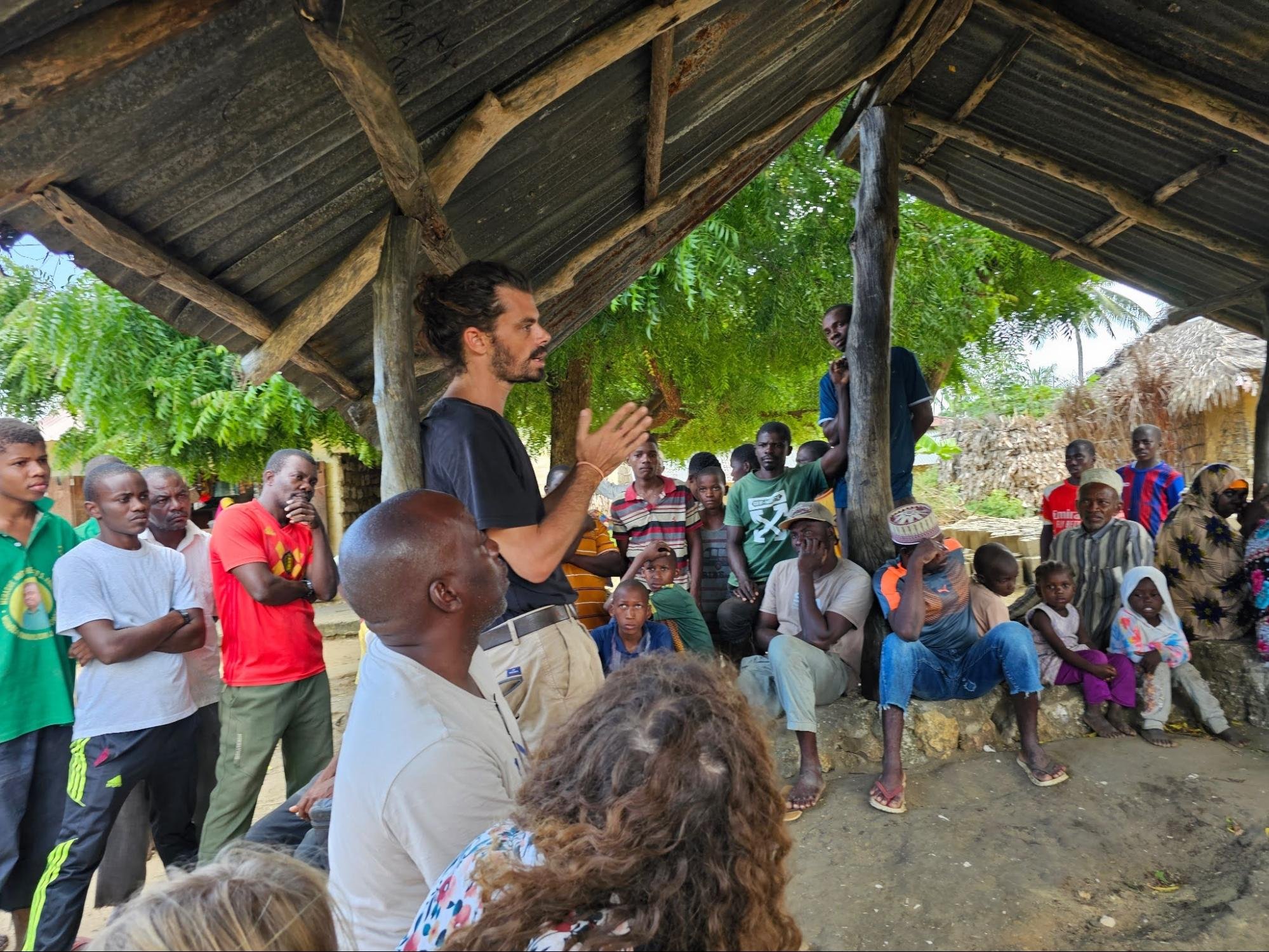
Asili team meeting with Shehia Fishers Committee members
Governance Authority

Governance rights are non-negotiable.

The community decides to close the area through its Shehia Fishers Committee and its Sheha. The SFC sets the rules, its members lay the boundary buoys, and the SFC and the cooperative patrol the area together. Fishers who want a boundary moved raise it with the Sheha, and the SFC moves the buoys.

Asili is an inputs and services partner, not a governor. We build on the community's existing institutions and work only with communities that want to work with us.

The area stays a community commons. What changes is that it now earns an income that flows back to the village and pays for the governance that protects it.

SFCs · Zanzibar BMUs · Tanzania LMMA Associations · Madagascar Equivalent bodies · Indo-Pacific
Built From Experience

The ocean is abundant. Communities deserve a share of that abundance.

Asili Company grew from more than 15 years of community sandfish farming in Madagascar, mainland Tanzania and Zanzibar, in the place where ocean governance meets community livelihoods. That work showed what the research also shows: community-based ocean management works when it is properly resourced.

What has usually been missing is an income of the community's own that makes protecting the sea worth more than fishing it out. The CORE Zone model was built to supply that income.